EFB vs AGM: which start-stop battery does your car need?
How EFB and AGM batteries differ, which start-stop cars need which, whether you can swap one for the other, and how each copes with hot climates.
In short
- EFB (enhanced flooded battery) is a tougher flooded battery for entry-level start-stop. AGM (absorbent glass mat) holds its acid in glass-fibre mats and is built for full start-stop with brake-energy recovery.
- Replace like for like or go up: AGM for AGM, EFB for EFB or AGM. Never put an EFB or a standard battery where the car came with AGM.
- Many cars must have a new battery registered to the car’s battery monitor after fitting, or the charging system keeps treating it as the old one.
- In hot climates, mount position and charging voltage matter as much as the technology: keep AGM away from the hottest part of the engine bay where the car allows.
Start-stop cars switch the engine off at every red light. That saves fuel, but it means the battery runs the lights, the fan and the radio while the engine is off, then restarts the engine, dozens of times a day. A standard flooded battery is not built for that, so carmakers fit one of two start-stop technologies: EFB or AGM. Fitting the wrong one is one of the most common reasons a new battery fails within a year.
EFB and AGM in one paragraph each
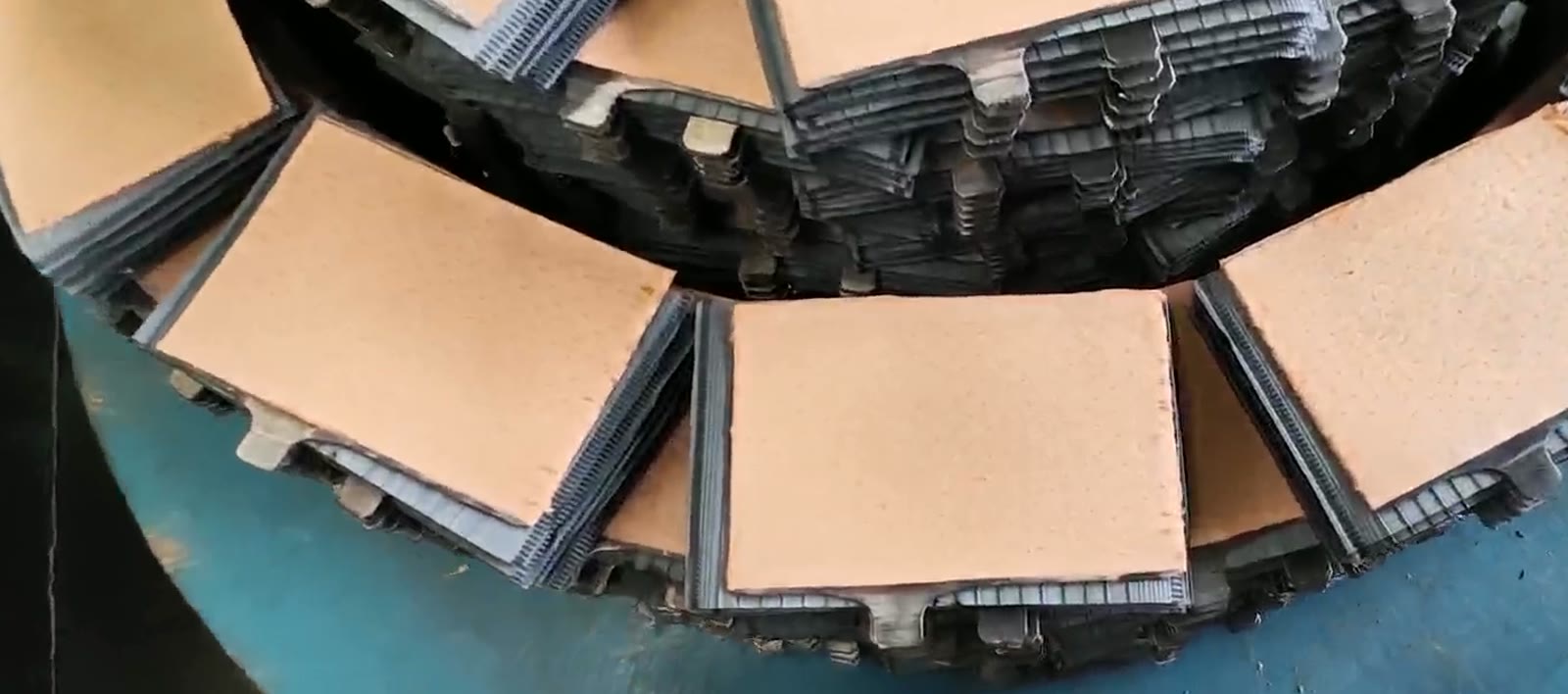
EFB, enhanced flooded battery. Still a flooded battery, with liquid acid around the plates, but built tougher: denser active material, additives in the negative plates that help it recharge from a partly empty state, and a fleece or scrim that holds the positive plate material in place through repeated cycling. It is the standard choice for entry-level start-stop and costs less than AGM.
AGM, absorbent glass mat. The acid is soaked into glass-fibre mats pressed between the plates, so nothing sloshes and the battery is sealed with a pressure valve. Tight packing gives low internal resistance: it accepts charge quickly and survives deep, frequent cycling. It is the choice for full start-stop, brake-energy recovery and cars with heavy electrical loads.
Side by side
| EFB | AGM | |
|---|---|---|
| Electrolyte | Liquid acid | Absorbed in glass mat, sealed |
| Built for | Entry-level start-stop | Full start-stop, brake-energy recovery, high electrical load |
| Cycling life | Well above a standard battery | Higher again |
| Charge acceptance | Good | Very good |
| Spill and tilt | Must stay upright | Spill-proof |
| Heat | Tolerates heat well | Sensitive to high charging voltage when hot |
| Price | Lower | Higher |
| NAIFU range | 6 sizes, 50 to 75 Ah, 540 to 720 A | 5 sizes, 60 to 105 Ah, 660 to 950 A |
Which one does your car need?
The car decides, not the shop. Look at the battery that came out of it:
- Label says AGM or VRLA: fit AGM.
- Label says EFB, ISS or start-stop: fit EFB, or AGM as an upgrade.
- No label left: check the owner’s manual or the parts catalogue for the vehicle. As a guide, cars with brake-energy recovery (often marketed as regenerative braking or micro-hybrid) and cars whose battery sits in the boot usually have AGM.
Japanese start-stop cars often use EFB in JIS idle-stop sizes such as Q-85 (D23 case) and S-95 (D26 case). European cars use EN cases from LB3 to L6. Our battery finder lists the start-stop fitment for each vehicle.
The replacement rule: same or better, never worse
| Car came with | Standard battery | EFB | AGM |
|---|---|---|---|
| Standard | Yes | Yes, an upgrade | Yes, an upgrade |
| EFB | No | Yes | Yes, an upgrade |
| AGM | No | No | Yes |
Downgrading is the expensive mistake. An EFB in an AGM car is cycled harder than it was built for; it loses capacity within months, start-stop stops working and warning lights appear. The customer then blames the battery brand.
Register the new battery
Many start-stop cars, especially European ones, have an intelligent battery sensor on the negative cable. It tracks the battery’s age and adjusts the charging voltage. After fitting a new battery, the car has to be told, using a scan tool or the dealer’s procedure, otherwise it keeps charging the new battery as if it were the worn one. If you change technology (EFB to AGM), the battery type must be updated too. Many Japanese and Korean cars do not need this step; check the vehicle’s service information.
Hot climates: what changes
Heat speeds up the chemistry that wears a battery out: grid corrosion, and water loss in flooded types. In markets where under-bonnet temperatures run high for months, a few habits add real life:
- Keep the technology the car specifies. A downgrade fails faster in heat, not slower.
- Check charging voltage. A regulator that overcharges does the most damage in hot weather, and AGM is the more sensitive of the two.
- Keep heat shields and battery jackets. Cars that ship with an insulating sleeve need it in the tropics.
- Stock fresh batteries. A battery sitting in a hot warehouse self-discharges faster; rotate stock and recharge anything below 12.4 V before sale.
Our separate guide on battery life in hot climates goes further.
For distributors: stocking start-stop sizes
Start-stop is spreading fast in new cars across Southeast Asia, the Middle East and Latin America, so the replacement wave is a few years behind. A small range covers most of it: two or three JIS idle-stop EFB sizes for Japanese brands, and EN EFB and AGM in L2 to L5 cases for European and many newer Korean and Chinese models. See NAIFU’s EFB and AGM ranges, or ask us which sizes sell in your market.
Questions buyers ask
Can I replace an AGM battery with an EFB?
No, not on a car that left the factory with AGM. Its start-stop and energy-recovery system expects AGM charge acceptance and cycling life, and an EFB will wear out early and can trigger start-stop faults.
Can I replace an EFB battery with an AGM?
Yes. AGM is an upgrade for an EFB car. Fit the same case size and terminal layout, and register the new battery if the car has a battery monitor.
Can I put a normal battery in a start-stop car?
It will start the car, but it will not last. Start-stop cycling discharges and recharges the battery many times a day, and a standard flooded battery loses capacity fast under that duty.
Which is better for hot weather, EFB or AGM?
Both work in hot climates when they match the car. Heat shortens the life of every lead-acid battery. AGM is sealed and loses no water, but it is sensitive to high charging voltage at high temperature; EFB tolerates heat well and costs less. Fit what the car specifies.
How do I know if my car has an EFB or AGM battery?
Read the label: it will say EFB, AGM, ISS or start-stop. A car with an automatic engine stop at traffic lights almost always has one of the two; cars with brake-energy recovery usually have AGM.